


“Are you self-conscious about your smile due to missing or damaged teeth?”
Dental crowns and teeth bridges at Bella Smiles could be the perfect solution! Crowns for teeth not only restore the appearance of damaged teeth but also strengthen and protect them, while a tooth bridge fills gaps to create a complete, confident smile.
From enhancing aesthetics to improving function, the advantages of crown and bridge treatment go far beyond just looks. In this blog, we’ll explore how crowns, teeth crowns, and dental crowns work, and why a teeth bridge or tooth bridge from Bella Smiles might be the right choice for your smile.
What are Dental Crowns and Bridges?
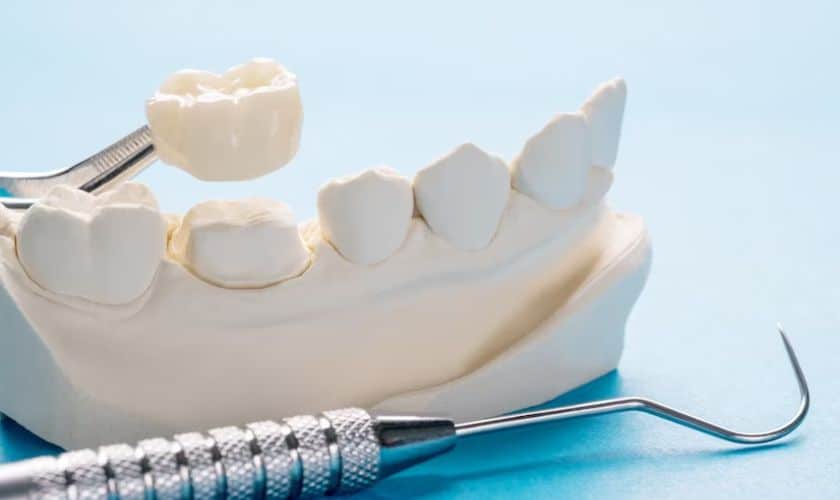
Dental crowns and bridges are two types of dental restorations that can help improve the appearance and function of your teeth. A crown is a cap placed over a damaged or decayed tooth to restore its shape, size, strength, and appearance. It can also be used to cover a dental implant or hold a bridge in place.
A bridge, on the other hand, is a prosthetic device that contains one or more artificial teeth (pontics) anchored by two crowns that are attached to adjacent natural teeth or implants. Bridges are designed to replace missing teeth and prevent surrounding teeth from shifting out of position.
Crowns and bridges can be made from different materials, such as porcelain, ceramic, metal alloys, or composite resin, depending on the patient’s preference and budget. To maintain their longevity, they require proper oral hygiene care, like brushing twice daily with fluoride toothpaste and flossing once daily.
If you have damaged or missing teeth due to trauma, decay, gum disease, or aging issues, talk with your Las Vegas dentist about whether dental crowns and bridges could be right for you!
Understanding Crown and Bridge Surgery
Crown and bridge surgery is a dental procedure designed to help individuals with damaged or missing teeth restore function and confidence. A dental crown—which resembles the top of a natural tooth—is placed over a weakened or damaged tooth or implant, protecting it while improving its appearance.
When one or more teeth are missing, a tooth bridge can help. A tooth bridge consists of two crowns on either side of the gap and a false tooth in between, creating a seamless, natural-looking smile.
Advantages of Crown and Bridge
The advantages of crown and bridge treatment extend far beyond aesthetics:
- Improved Chewing and Speech: Filling gaps left by missing teeth helps restore normal chewing function and clear speech.
- Protection for Surrounding Teeth: Crowns and bridges reduce stress and wear on neighboring teeth by filling in spaces.
- Strength and Durability: Crowns for teeth help protect weakened teeth from further damage due to decay or injury.
- Boosted Confidence: Restoring missing or damaged teeth can enhance your smile and self-esteem.
Additionally, crown and bridge surgery offers a cost-effective solution for improving oral health and maintaining a natural-looking smile.
Can You Get a Crown After Root Canal Therapy?
Many patients wonder if they can receive dental crowns following root canal therapy. The answer is yes! With proper care, a crown can be placed after a canal treatment to protect the tooth and restore its appearance and function.
What to Expect During Crown and Bridge Surgery
Feeling anxious or nervous about dental procedures is completely normal. The good news is that crown and bridge surgery is an outpatient procedure that can be performed in a dental office or hospital setting without requiring an overnight stay. This allows patients to receive quality care without spending extended time in a medical facility.
One of the key benefits of an outpatient procedure is flexibility. Appointments can be scheduled around your busy lifestyle, whether you prefer mornings or afternoons, making fitting dental care into your routine easier.
The option to undergo the procedure in a familiar office also adds to patient comfort. For those who live far from hospitals or prefer not to travel, being treated in a dental office can help reduce anxiety and make the experience more relaxing.
In summary, crown and bridge surgery as an outpatient procedure offers several advantages, including flexible scheduling, reduced anxiety due to familiar surroundings, and less overall time spent in a medical facility—all while receiving effective and professional dental care.
Crown and Bridge Surgery: A Less Invasive and Effective Option
Crown and bridge surgery is a popular dental procedure for addressing various issues, including missing or damaged teeth. Compared to other dental treatments such as dentures or braces, it is less invasive and often more comfortable for patients.
One major advantage is that crowns and bridges can restore your smile without removing healthy teeth. Unlike dentures or braces, which may require tooth extractions for proper fit, crowns and bridges allow you to preserve your natural teeth.
Since this outpatient procedure typically doesn’t require general anesthesia, recovery time is minimal. Most patients can return home the same day with little to no discomfort.
Crown and bridge restorations are also customized to your needs. Your dentist will design a crown or bridge that perfectly matches your existing teeth, giving you a natural, seamless smile.
Cost-Effective Solution
Cost is an essential factor in any dental treatment. Fortunately, crown and bridge surgery is usually less expensive than other procedures like dentures or braces.
This is because the procedure focuses on placing a prosthetic tooth over an existing tooth or implant rather than replacing multiple teeth or realigning them with orthodontics. The materials used for dental crowns and bridges are also generally more affordable than those used in other treatments.
Costs can vary depending on location, dentist fees, and insurance coverage. Even without insurance, many dental offices offer payment plans to make treatment more accessible. Considering the long-lasting results, crown and bridge surgery is a worthwhile investment in oral health.
Reversible and Flexible
Another advantage of crown and bridge surgery is that it is reversible. If a crown or bridge doesn’t fit properly, it can be adjusted or replaced without permanently damaging your teeth.
During treatment, a temporary crown or bridge is placed while your permanent restoration is being made. Any discomfort or issues with the temporary restoration can be corrected before the final crown or bridge is fitted.
Additionally, crowns and bridges can serve as interim solutions for patients planning future dental implants. This ensures you don’t have to go without a replacement tooth while waiting for implant treatment.
Proper care is still essential. Maintaining good oral hygiene—brushing twice daily and flossing regularly—will help prolong the life of your teeth, crowns, and bridge restorations. Knowing that restorations can be adjusted or replaced provides peace of mind for patients considering this treatment.
The Bottom Line
Dental crowns and tooth bridges offer a reliable, effective solution for restoring your smile, improving oral function, and boosting confidence. Whether you need crowns for teeth, a tooth bridge, or a combination of both, these restorations help protect your natural teeth, fill gaps, and provide long-lasting results. With proper care and regular check-ups, your dental crowns and teeth bridge can maintain their strength, appearance, and functionality for years to come.
At Bella Smiles, our experienced team provides personalized guidance on crown and bridge treatments, ensuring each restoration fits perfectly and enhances your smile naturally. Schedule a consultation today to discover how crowns, teeth crowns, and tooth bridges can transform your smile and restore your confidence.